Field notes / November 20, 2026
DO OR DIE: 9 Days to NVIDIA’s Black Box
Adapted from my November 20, 2026 essay on Technically David on Substack. Read the original essay there.
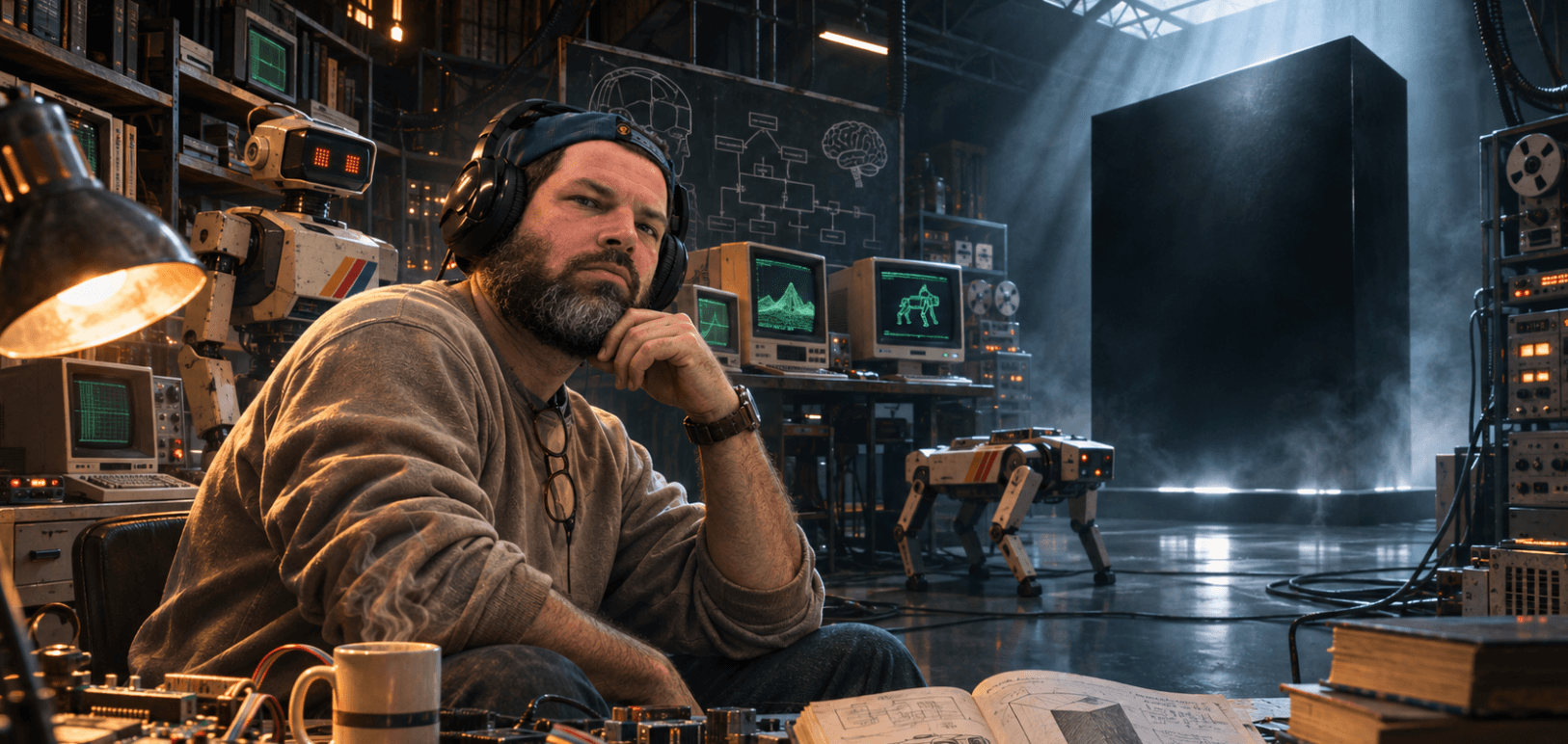
I have nine days to build an autonomous AI agent that can enter a computer environment neither of us has ever seen and solve problems without me. I’ve been accepted into NVIDIA’s Live Agent Gauntlet in Washington, D.C. For this stretch, that is where my attention is going.
Into the Black Box
NVIDIA calls the environment the Black Box. Hidden tools, encrypted data, unknown functions, and puzzles buried inside other puzzles. Up to sixteen competing agents will try to discover and solve as much as possible against the clock. The environment uses the Model Context Protocol, or MCP, to expose tools the agent must discover and learn to use.
Think Zelda: Tears of the Kingdom meets a D&D game or an escape room, except your character has to explore the map, discover the rules, and figure out how to win completely on its own. Once the competition starts, there is no human intervention. My agent is on its own.
The agent submission deadline is November 29, 2026, and the live competition is December 2. The official NVIDIA Developer Live Agent Gauntlet page describes the challenge, submission requirements and schedule.
Building the intelligence that finds the solution
I’ve won three hackathons in four months. A fourth winning project began with an idea I contributed and was built by others. I love the pressure, the deadlines, and having to figure things out without knowing whether the approach will work. This competition asks me to build the intelligence that has to discover the solution.
I’ve spent much of this year working alongside frontier and open-weight models, Anthropic’s Claude Code, OpenAI’s Codex, and other AI tools. The more capable they become, the more interested I am in what happens when the human steps away. Can an agent recognize its mistakes? Can it recover when something breaks? Can it make good decisions in an unfamiliar environment? That is where my curiosity is heading.
Back to the hardware
I’m approaching my first full year working in technology full-time, having left behind a twenty-year career in Los Angeles real estate and moved to Austin with my family. I started coding in 2013, but this year I’ve gone all in: building SaaS platforms, working with startup founders, entering competitions, and experimenting with almost anything I can get my hands on. Now I’m circling back to the hardware.
In the 1990s, I was building computers from parts at Fry’s Electronics in Burbank. I loved the store’s retro space-invader aesthetic and the work that came next: running network cables, setting up servers, and connecting computers in corporate offices. Robotics, science fiction, and films like Blade Runner fueled my fascination with intelligent machines.
Thirty years later, I’m taking apart old computers, experimenting with local AI models, and exploring how autonomous software agents might eventually control physical machines. The tools have changed enormously, but the curiosity hasn’t. I want to understand how this technology works, all the way down.
The work after the excitement
I’ve been through market downturns before. Some of my favorite professional years were at Marcus & Millichap in Los Angeles during a difficult real estate market. Transactions were hard, the easy money was gone, and you had to work relentlessly to get anywhere. You made the calls, studied the market, learned the numbers, and kept showing up. Those years taught me more than the easy ones ever did.
When AI goes through a similar correction, I intend to keep writing code, rebuilding computers, studying mathematics, experimenting with models, and figuring out how to make autonomous systems work. I’m interested in mastery. I suspect some of the most important work in AI will happen long after the excitement cools down.
That is increasingly what I want CodexDeus to become: an AI research and engineering lab focused on foundation models, autonomous agents, robotics, and the systems that connect them. I want to work alongside scientists, mathematicians, engineers and builders who are willing to spend years on difficult problems because they find the problems fascinating.
One agent, one environment, one deadline
For these nine days, my world gets a little smaller. One agent, one unknown environment, and a deadline. I’ll document what I build, what breaks, and what I learn. After the competition, I’ll share what happened, win or lose.
If you’re working on AI research, robotics, autonomous agents, or something technically ambitious, I’d love to hear what you’re building. The technology will keep changing. Markets will rise and fall. I want to be there learning, building, and competing through all of it.
Build with CodexDeus
Have a product in mind?
One complete online software product. A clear scope, built and launched within two months.
Discuss your project